Cloud computing has revolutionized the way businesses operate, and msft azure stands at the forefront of this transformation. As Microsoft’s cloud platform, it offers unmatched scalability, security, and integration for enterprises worldwide. Let’s dive into what makes msft azure a game-changer.




What Is msft azure and Why It Matters

Microsoft Azure, commonly referred to as msft azure, is a comprehensive cloud computing platform launched by Microsoft in 2010. It provides over 200 services ranging from virtual machines and AI tools to database management and IoT solutions. Unlike traditional on-premise infrastructure, msft azure enables organizations to scale resources on demand, reduce capital expenditure, and accelerate digital transformation.
Core Components of msft azure
The strength of msft azure lies in its modular architecture. Users can pick and choose services based on their needs, whether it’s hosting a simple website or running complex machine learning models.
- Compute Services: Includes Virtual Machines (VMs), Azure Functions (serverless), and Azure Kubernetes Service (AKS) for container orchestration.
- Storage Solutions: Offers Blob Storage for unstructured data, Disk Storage for VMs, and Data Lake for big data analytics.
- Networking: Azure Virtual Network, Load Balancer, and Content Delivery Network (CDN) ensure secure and fast connectivity.
“Azure is not just a cloud platform; it’s a complete ecosystem that integrates seamlessly with existing Microsoft products like Office 365 and Dynamics 365.” — Satya Nadella, CEO of Microsoft
Global Infrastructure and Availability
msft azure operates in over 60 regions worldwide, making it one of the most geographically distributed cloud platforms. This global reach ensures low latency, compliance with local data regulations, and high availability.
Each region consists of one or more data centers equipped with redundant power, cooling, and networking. This redundancy is critical for maintaining uptime during outages. For example, Azure’s region map shows strategic placements in North America, Europe, Asia-Pacific, and even emerging markets like South Africa and UAE.
Key Benefits of Using msft azure
Organizations across industries are migrating to msft azure due to its robust feature set and business advantages. From startups to Fortune 500 companies, the platform delivers tangible value.
Scalability and Flexibility
One of the biggest advantages of msft azure is its ability to scale resources up or down based on demand. Whether you’re experiencing a traffic spike during a product launch or need to process large datasets overnight, Azure automatically adjusts capacity.
This elasticity eliminates the need for over-provisioning hardware. For instance, an e-commerce site can scale up during Black Friday and scale down afterward, optimizing costs.
Cost Efficiency and Pay-as-You-Go Model
msft azure follows a consumption-based pricing model. You only pay for what you use, which is a significant shift from traditional IT budgets that require large upfront investments.
Azure also offers several cost management tools:
- Azure Cost Management + Billing: Provides real-time insights into spending and helps set budgets.
- Reserved Instances: Allows users to reserve VMs for 1 or 3 years at discounted rates (up to 72% savings).
- Hybrid Benefit: Lets organizations use existing Windows Server and SQL Server licenses on Azure, reducing licensing costs.
Enterprise-Grade Security and Compliance
Security is a top priority for msft azure. The platform is compliant with over 100 global standards, including GDPR, HIPAA, ISO 27001, and SOC 1/2/3.
Azure Security Center provides unified security management and advanced threat protection across hybrid cloud workloads. It continuously monitors for vulnerabilities and offers remediation recommendations.
Additionally, Azure Active Directory (Azure AD) enhances identity and access management, enabling multi-factor authentication (MFA), conditional access policies, and single sign-on (SSO) across applications.
msft azure vs. Competitors: How It Stands Out
The cloud market is dominated by three major players: Amazon Web Services (AWS), Google Cloud Platform (GCP), and msft azure. While AWS leads in market share, msft azure differentiates itself through integration, hybrid capabilities, and enterprise focus.
Integration with Microsoft Ecosystem
For organizations already using Microsoft products like Windows Server, Active Directory, or Office 365, msft azure offers seamless integration. This reduces migration complexity and training costs.
For example, Azure AD syncs with on-premise Active Directory, allowing users to log in to cloud and on-premise systems with the same credentials. Similarly, Azure Virtual Desktop enables secure access to Windows desktops and apps from any device.
Hybrid Cloud Leadership
Unlike AWS and GCP, which are primarily public cloud providers, msft azure excels in hybrid cloud scenarios. Azure Stack allows businesses to run Azure services on-premise, creating a consistent environment across cloud and data centers.
This is particularly valuable for industries like finance and healthcare, where data residency and regulatory compliance require on-premise solutions. With Azure Arc, organizations can manage resources across multi-cloud and on-premise environments from a single control plane.
Market Share and Growth Trends
According to Synergy Research Group, msft azure holds approximately 24% of the global cloud infrastructure market, second only to AWS. However, Azure has been growing faster than its competitors, especially in enterprise segments.
A key driver of this growth is Microsoft’s strong sales force and partner network. Many enterprises prefer dealing with a single vendor for both software and cloud services, giving msft azure a competitive edge.
Core Services Offered by msft azure
msft azure provides a vast array of services across multiple domains. Understanding these services is crucial for leveraging the platform effectively.
Compute and Virtualization
Azure offers several compute options tailored to different workloads:
- Azure Virtual Machines: Flexible computing environments for running Windows or Linux workloads.
- Azure App Service: A fully managed platform for building, deploying, and scaling web apps.
- Azure Functions: A serverless compute service that runs code in response to events without managing infrastructure.
- Azure Kubernetes Service (AKS): Simplifies deployment, management, and scaling of containerized applications.
These services support DevOps practices, enabling continuous integration and delivery (CI/CD) pipelines through integration with GitHub, Azure DevOps, and Jenkins.
Data and AI Services
msft azure is a leader in artificial intelligence and data analytics. Its AI services empower developers to build intelligent applications without deep expertise in machine learning.
- Azure Cognitive Services: Pre-built APIs for vision, speech, language, and decision-making (e.g., facial recognition, text translation).
- Azure Machine Learning: A cloud-based environment for training, deploying, and managing ML models.
- Azure Synapse Analytics: Combines big data and data warehousing into a single service for real-time analytics.
- Azure Cosmos DB: A globally distributed, multi-model database service with low latency and high availability.
For example, a retail company can use Azure Cognitive Services to analyze customer sentiment from social media and Azure ML to predict demand trends.
Networking and Content Delivery
Reliable networking is essential for cloud performance. msft azure provides a robust suite of networking tools:
- Azure Virtual Network: Enables secure communication between Azure resources and on-premise networks via site-to-site VPN or ExpressRoute.
- Azure Load Balancer: Distributes traffic across multiple VMs to ensure high availability.
- Azure CDN: Delivers content to users with low latency using edge servers located around the world.
- Azure Firewall: A managed, cloud-based network security service that protects Azure Virtual Network resources.
These services are critical for maintaining performance and security, especially for global applications.
Real-World Applications of msft azure
msft azure is not just theoretical—it powers real-world solutions across industries. From healthcare to manufacturing, organizations are leveraging Azure to innovate and improve efficiency.
Healthcare: Improving Patient Outcomes
Hospitals and clinics use msft azure to store and analyze electronic health records (EHRs), enable telemedicine, and develop AI-driven diagnostics.
For instance, the University of California, San Francisco (UCSF) uses Azure to process medical imaging data and apply machine learning to detect diseases like cancer earlier. By leveraging Azure’s HIPAA-compliant environment, they ensure patient data remains secure.
Manufacturing: Enabling Smart Factories
Manufacturers deploy msft azure to implement Industry 4.0 initiatives. Through Azure IoT Hub, companies connect machines, sensors, and devices to collect real-time data on production lines.
Siemens, for example, uses Azure to power its Industrial Edge platform, enabling predictive maintenance and reducing downtime. By analyzing sensor data in real time, they can identify equipment failures before they occur.
Financial Services: Secure and Scalable Banking
Banks and fintech firms rely on msft azure for secure transaction processing, fraud detection, and customer analytics.
JPMorgan Chase uses Azure to run risk analysis models and support its mobile banking platform. The bank benefits from Azure’s scalability during peak transaction periods and its advanced security features to protect sensitive financial data.
Innovation and Future Trends in msft azure
Microsoft is continuously investing in msft azure to stay ahead of technological trends. The platform is evolving to support next-generation technologies like quantum computing, extended reality (XR), and sustainable cloud computing.
Quantum Computing with Azure Quantum
Azure Quantum is a full-stack cloud ecosystem for quantum computing. It allows researchers and developers to experiment with quantum algorithms using hardware from partners like IonQ, Quantinuum, and Microsoft’s own topological qubit research.
While still in early stages, quantum computing has the potential to solve problems that are intractable for classical computers, such as simulating complex molecules for drug discovery.
AI and Automation at Scale
Microsoft is embedding AI into every layer of msft azure. From automated scaling decisions to intelligent monitoring, AI-driven operations (AIOps) are becoming standard.
Azure Automanage automates common management tasks like patching, backup, and performance optimization. This reduces operational overhead and minimizes human error.
Additionally, GitHub Copilot, powered by Azure AI, assists developers in writing code faster by suggesting lines and functions in real time.
Sustainability and Green Cloud Initiatives
Microsoft has committed to being carbon negative by 2030 and removing all historical emissions by 2050. msft azure plays a central role in this mission.
Azure data centers use renewable energy sources and advanced cooling technologies to minimize environmental impact. The Azure Sustainability Calculator helps organizations measure the carbon footprint of their cloud usage and compare it with on-premise alternatives.
Getting Started with msft azure: A Step-by-Step Guide
Starting with msft azure doesn’t require a massive investment. Microsoft offers free tools and resources to help beginners get up to speed.
Create a Free Azure Account
Anyone can sign up for a free msft azure account, which includes $200 in credits valid for 30 days and access to over 25 always-free services (e.g., Azure Functions, Blob Storage).
To get started, visit Azure Free Account and register with a valid email and credit card (no charges unless you upgrade).
Explore the Azure Portal and CLI
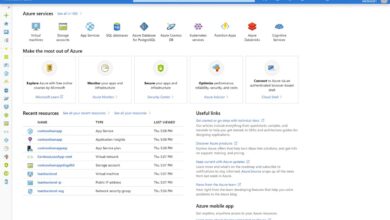
The Azure Portal is a web-based interface for managing resources. It features a dashboard, resource groups, and marketplace for deploying services.
For automation and scripting, the Azure CLI (Command Line Interface) and PowerShell modules allow developers to manage Azure from the terminal.
Example: Deploy a virtual machine using CLI:
az vm create –resource-group myResourceGroup –name myVM –image UbuntuLTS –generate-ssh-keys
Leverage Learning Resources and Certifications
Microsoft Learn offers free, interactive modules to learn msft azure. Topics range from fundamentals to advanced AI and security.
Popular certifications include:
- Azure Fundamentals (AZ-900)
- Azure Administrator (AZ-104)
- Azure Developer (AZ-204)
- Azure Solutions Architect (AZ-305)
Earning these certifications validates skills and enhances career prospects in cloud computing.
Challenges and Considerations When Using msft azure
While msft azure offers many benefits, organizations should be aware of potential challenges to avoid pitfalls.
Complexity and Learning Curve
With over 200 services, msft azure can be overwhelming for new users. Misconfigurations can lead to security vulnerabilities or unexpected costs.
Solution: Start with core services, use Azure Advisor for best practices, and invest in training.
Vendor Lock-In Risks
Heavy reliance on Azure-specific services (e.g., Azure Functions, Cosmos DB) can make migration to other clouds difficult.
Mitigation: Use open standards, containerization (Docker, Kubernetes), and multi-cloud management tools like Terraform.
Cost Management Challenges
Without proper monitoring, cloud spending can spiral out of control. Idle resources, unattached disks, and over-provisioned VMs contribute to waste.
Best Practice: Implement tagging policies, set budget alerts, and conduct regular cost reviews using Azure Cost Management.
What is msft azure?
msft azure is Microsoft’s cloud computing platform that provides a wide range of services including computing, storage, networking, AI, and analytics. It enables businesses to build, deploy, and manage applications across a global network of data centers.
How does msft azure compare to AWS?
While AWS has a larger market share, msft azure excels in hybrid cloud integration, enterprise support, and seamless connectivity with Microsoft products. Azure is often preferred by organizations already using Windows Server, Active Directory, or Office 365.
Is msft azure secure?
Yes, msft azure is highly secure, compliant with over 100 international standards, and offers advanced security tools like Azure Security Center, Azure AD, and encryption at rest and in transit.
Can I use msft azure for free?
Yes, Microsoft offers a free tier with $200 in credits for 30 days and access to many always-free services. This allows users to explore Azure without upfront costs.
What industries benefit most from msft azure?
Industries such as healthcare, finance, manufacturing, education, and government benefit significantly from msft azure due to its compliance, scalability, and AI capabilities.
msft azure is more than just a cloud platform—it’s a catalyst for digital transformation. With its powerful services, global infrastructure, and deep integration with the Microsoft ecosystem, it empowers organizations to innovate, scale, and secure their operations. Whether you’re a developer, IT professional, or business leader, understanding and leveraging msft azure can provide a significant competitive advantage in today’s digital economy.
Further Reading: