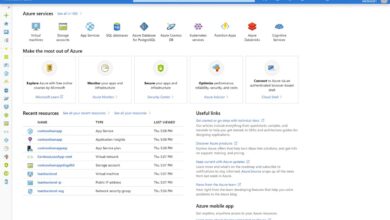
Logging into the Azure portal is your gateway to managing cloud resources with ease. Whether you’re a developer, administrator, or business owner, mastering the Azure portal log in process ensures smooth, secure, and efficient cloud operations. Let’s dive into everything you need to know.






Understanding the Azure Portal Log In Process

The Azure portal is Microsoft’s web-based interface for managing cloud services, virtual machines, storage, networking, and more. The first step to accessing these powerful tools is a successful Azure portal log in. This process authenticates your identity and grants access based on assigned roles and permissions.
What Is the Azure Portal?
The Azure portal (portal.azure.com) is a centralized dashboard that allows users to deploy, configure, and monitor resources in Microsoft Azure. It provides a graphical user interface (GUI) that simplifies complex cloud management tasks, making it accessible even to those with limited command-line experience.
- It supports over 200 services including AI, IoT, databases, and analytics.
- Available globally with regional data centers ensuring low latency.
- Integrates seamlessly with other Microsoft products like Office 365 and Dynamics 365.
For more information, visit the official Microsoft Learn page on Azure Portal.
Why Secure Log In Matters
Because the Azure portal controls critical infrastructure, unauthorized access can lead to data breaches, service outages, or financial loss. A secure Azure portal log in isn’t just about convenience—it’s a cornerstone of cloud security.
- Prevents unauthorized access to sensitive data and configurations.
- Ensures compliance with regulations like GDPR, HIPAA, and SOC 2.
- Protects against ransomware and lateral movement attacks within cloud environments.
“Security is not a feature, it’s a foundation.” – Microsoft Security Best Practices
Step-by-Step Guide to Azure Portal Log In
Successfully logging into the Azure portal involves several key steps. Whether you’re using a personal Microsoft account or an organizational (work or school) account, this guide will walk you through the process seamlessly.
Accessing the Login Page
To begin the Azure portal log in, navigate to portal.azure.com in any modern web browser such as Chrome, Edge, or Firefox. The site automatically redirects to the Microsoft sign-in page where authentication begins.
- Ensure you’re using HTTPS to prevent man-in-the-middle attacks.
- Avoid public Wi-Fi when logging in; use a trusted network or a secure VPN.
- Bookmark the official URL to avoid phishing sites mimicking the login page.
Phishing remains a top threat—always verify the domain name in the address bar before entering credentials.
Entering Your Credentials
On the sign-in screen, enter your email address associated with your Azure subscription. This could be a Microsoft Account (MSA) or a work/school account from Azure Active Directory (Azure AD).
- If you’re part of an organization, use your corporate email (e.g., user@company.com).
- Personal users can log in with their Outlook.com, Hotmail.com, or Live.com addresses.
- After entering the email, click ‘Next’ and input your password.
Microsoft employs intelligent risk detection during the Azure portal log in. If suspicious activity is detected—like a login from a new location—you may be prompted for additional verification.
Completing Multi-Factor Authentication (MFA)
After entering your password, if MFA is enabled, you’ll be prompted to verify your identity using a second factor. Options include:
- Mobile app notification (e.g., Microsoft Authenticator).
- Text message (SMS) code.
- Phone call verification.
- Hardware security key (e.g., YubiKey).
MFA significantly reduces the risk of account compromise. According to Microsoft, it blocks over 99.9% of automated attacks.
“Multi-factor authentication is the single most effective step you can take to protect your account.” – Microsoft Security Team
Common Issues During Azure Portal Log In and How to Fix Them
Even experienced users encounter obstacles during the Azure portal log in process. Understanding common issues and their solutions can save time and reduce frustration.
Forgot Password or Locked Account
One of the most frequent problems is forgetting your password or getting locked out due to multiple failed attempts. Azure provides self-service password reset (SSPR) to help users regain access quickly.
- Click ‘Forgot password?’ on the login screen.
- Verify your identity via email, phone, or authenticator app.
- Set a new strong password that meets complexity requirements.
Organizations should enable SSPR in Azure AD to empower users and reduce IT helpdesk load. Learn how to configure it at Microsoft’s SSPR documentation.
Incorrect Tenant or Subscription Selection
Users with access to multiple Azure tenants or subscriptions might accidentally log into the wrong environment. This can lead to confusion when resources aren’t visible.
- After logging in, check the directory switcher in the top-right corner.
- Select the correct directory (tenant) from the dropdown menu.
- Ensure your desired subscription is selected in the subscription filter.
Tip: Use custom branding in Azure AD to visually distinguish between production and development tenants.
Browser Compatibility and Cache Issues
Sometimes, the Azure portal fails to load due to outdated browsers or corrupted cache. This is often mistaken for a login failure.
- Use supported browsers: Microsoft Edge, Google Chrome, Mozilla Firefox, or Safari.
- Clear browser cookies and cache regularly.
- Disable browser extensions that may interfere with JavaScript execution.
Try opening the Azure portal in an incognito or private browsing window to test if the issue persists.
Enhancing Security for Azure Portal Log In
While the basic login process is straightforward, securing the Azure portal log in requires proactive measures beyond username and password.
Enable Multi-Factor Authentication (MFA)
MFA is not optional for production environments. It adds a critical layer of defense by requiring users to prove their identity through multiple methods.
- Enforce MFA for all users, especially administrators.
- Use phishing-resistant methods like FIDO2 security keys or the Microsoft Authenticator app.
- Configure MFA registration policies in Azure AD to ensure compliance.
Go to the Microsoft MFA documentation to learn about deployment best practices.
Implement Conditional Access Policies
Conditional Access in Azure AD allows organizations to control how and when users can perform an Azure portal log in based on specific conditions.
- Require MFA when logging in from untrusted locations.
- Block access from unsupported devices or operating systems.
- Enforce device compliance (e.g., Intune-managed devices only).
For example, you can create a policy that blocks logins from outside the corporate network unless the user is on a company-managed device.
“Conditional Access turns security policies into automated enforcement actions.” – Microsoft Azure Documentation
Use Role-Based Access Control (RBAC)
RBAC ensures users have only the permissions they need. During the Azure portal log in, the system evaluates assigned roles to determine what resources a user can view or modify.
- Assign built-in roles like ‘Reader’, ‘Contributor’, or ‘Owner’ based on job function.
- Create custom roles for granular control over specific services.
- Regularly review access with Azure AD Access Reviews.
Principle of least privilege is key: never grant ‘Owner’ access unless absolutely necessary.
Using Single Sign-On (SSO) for Seamless Azure Portal Log In
For enterprises with existing identity systems, Single Sign-On (SSO) streamlines the Azure portal log in experience by allowing users to authenticate once and access multiple applications.
How SSO Integrates with Azure AD
Azure Active Directory acts as the identity provider (IdP), enabling SSO for both cloud and on-premises applications. When a user attempts an Azure portal log in, Azure AD verifies their identity and issues a secure token.
- Supports SAML, OAuth, OpenID Connect, and WS-Fed protocols.
- Enables seamless access to Office 365, Salesforce, Workday, and custom apps.
- Reduces password fatigue and improves user productivity.
Organizations using Active Directory Federation Services (AD FS) can federate with Azure AD for hybrid identity management.
Setting Up SSO for Your Organization
Configuring SSO requires planning and coordination between IT and security teams. The process involves:
- Registering your domain in Azure AD (e.g., company.com).
- Configuring DNS records for domain verification.
- Setting up federation or password hash synchronization.
- Testing SSO workflows before rolling out to all users.
Use the Azure AD SSO guide for step-by-step instructions.
Benefits of SSO for Azure Portal Access
Implementing SSO for Azure portal log in offers numerous advantages:
- Improved user experience with fewer passwords to remember.
- Centralized identity management and audit logging.
- Enhanced security through consistent policy enforcement.
- Easier compliance reporting and access revocation.
SSO also supports just-in-time (JIT) access models, reducing standing privileges.
Best Practices for a Smooth Azure Portal Log In Experience
To ensure consistent and secure access, follow these expert-recommended best practices every time you perform an Azure portal log in.
Use a Password Manager
Strong, unique passwords are essential. A password manager helps generate and store complex credentials securely, reducing the risk of reuse or weak passwords.
- Recommended tools: Bitwarden, 1Password, LastPass, or Microsoft Edge’s built-in manager.
- Never save passwords in plain text files or browsers without encryption.
- Enable master password protection and biometric unlock where available.
According to a 2023 Microsoft study, 61% of data breaches involved compromised credentials—many due to poor password hygiene.
Regularly Update Your Contact Information
Keeping your phone number, alternate email, and security questions updated ensures you can recover access if locked out.
- Update recovery options in My Account portal (myaccount.microsoft.com).
- Ensure your mobile number is current for SMS-based MFA.
- Designate a trusted contact for emergency access in Azure AD.
This is especially important for administrators who manage critical infrastructure.
Monitor Sign-In Activity
Azure AD provides detailed sign-in logs that help detect suspicious behavior. Regularly reviewing these logs can prevent unauthorized access.
- Access sign-in logs via Azure portal > Azure Active Directory > Sign-ins.
- Filter by user, app, status (success/failure), or risk level.
- Set up alerts for failed logins or logins from unusual locations.
Use Azure Monitor and Microsoft Sentinel for advanced threat detection and automated responses.
Advanced Tips for Power Users and Administrators
For those who manage Azure at scale, mastering advanced features around the Azure portal log in can boost efficiency and security.
Using Azure CLI and PowerShell After Login
While the portal provides a GUI, command-line tools like Azure CLI and Azure PowerShell offer automation and scripting capabilities. After logging in via the portal, you can authenticate these tools using the same session.
- Run ‘az login’ to authenticate via browser popup.
- Use ‘Connect-AzAccount’ in PowerShell for interactive login.
- Leverage service principals for non-interactive scripts.
These tools integrate with the same Azure AD authentication backend, ensuring consistent access control.
Managing Multiple Subscriptions Efficiently
Users with access to multiple subscriptions should organize their view to avoid confusion during the Azure portal log in and subsequent navigation.
- Use subscription aliases to assign meaningful names (e.g., ‘Production-EU’, ‘Dev-US’).
- Create management groups to apply policies across subscriptions.
- Save custom dashboards per subscription for quick access.
Tip: Use Azure Lighthouse to manage multi-tenant environments from a single portal view.
Customizing the Azure Portal Dashboard
After a successful Azure portal log in, personalize your dashboard to display the most relevant resources and metrics.
- Pin frequently used services like Virtual Machines, Storage Accounts, or App Services.
- Add charts for cost analysis, CPU usage, or network traffic.
- Share dashboards with team members for collaborative monitoring.
Custom dashboards improve productivity by reducing navigation time.
What should I do if I can’t log in to the Azure portal?
First, verify your internet connection and try a different browser. If the issue persists, reset your password using the ‘Forgot password?’ link. Check if your account is locked due to multiple failed attempts. If you’re using MFA, ensure your authenticator app or phone is working. Contact your Azure administrator if you suspect access has been revoked.
Can I access the Azure portal from a mobile device?
Yes, the Azure portal is mobile-responsive and works well on smartphones and tablets. You can also download the Microsoft Azure app from the App Store or Google Play for enhanced mobile management, including monitoring alerts and restarting services.
Is it safe to log in to the Azure portal on public computers?
No, it is not recommended. Public computers may have keyloggers or session hijacking risks. Always use private, trusted devices. If you must use a public machine, log in through InPrivate/Incognito mode and log out completely afterward. Never save credentials.
How do I switch between Azure directories after logging in?
After logging in, click your profile icon in the top-right corner and select ‘Switch directory’. Choose the desired Azure AD tenant from the list. You can also use the directory switcher in the portal’s main menu.
What is the difference between a Microsoft account and an Azure AD account?
A Microsoft account (MSA) is a personal account (e.g., @outlook.com) used for consumer services. An Azure AD account is an organizational account managed by a company or institution, typically using a custom domain (e.g., @company.com). Both can be used for Azure portal log in, but Azure AD offers advanced management, security, and compliance features.
Mastering the Azure portal log in is essential for anyone working with Microsoft’s cloud platform. From basic access to advanced security configurations, every step impacts your ability to manage resources effectively. By following best practices—like enabling MFA, using SSO, and monitoring sign-ins—you ensure a secure, efficient, and reliable experience. Whether you’re a beginner or a seasoned admin, continuous learning and vigilance are key to staying ahead in the cloud.
Recommended for you 👇
Further Reading: